

Stock loss is one of the biggest silent killers of retail businesses in Ghana. Whether it’s due to expired products, theft, over-ordering, or simply a lack of understanding of what sells, every cedi lost to poor stock management is a cedi that never contributes to your profits.
The good news is that an increasing number of Ghanaian retailers are addressing this issue, not by hiring more staff or spending more money, but by utilizing their existing data more effectively.
Here’s how they are doing it.
The Real Cost of Poor Stock Management
Most retailers concentrate on what is immediately visible empty shelves, customer complaints, and apparent theft. However, the hidden costs associated with poor stock management run much deeper.
Consider the following:
- Overstocking ties up your cash in products that are just sitting on shelves.
- Understocking results in lost sales when customers cannot find what they need.
- Expired products mean writing off stock that you have already paid for.
- Manual counting errors lead to discrepancies between your records and actual stock levels.
For the average Ghanaian retailer, these invisible losses can account for 10-30% of potential revenue every month.
That is not a small problem. That is a business-altering figure.
For the average Ghanaian retailer, poor stock management can silently consume 10-30% of potential monthly revenue.
How Data Changes Everything
The retailers currently succeeding in Ghana are not necessarily those with the largest stores or the most staff. Instead, they are the ones who understand their numbers.
Specifically, they focus on three key metrics that many retailers tend to overlook:
- Sell-Through Rate:
Which products are selling quickly, and which ones are sitting on the shelves for too long? - Reorder Points:
At what stock level should you automatically reorder each product? - Supplier Performance:
Which suppliers deliver on time, and which ones cause stockouts?
By consistently tracking these three metrics, stock loss decreases significantly. This shift allows retailers to make decisions based on data rather than relying on memory.
Real Examples of Data Reducing Stock Loss
Here are three common scenarios faced by Ghanaian retailers, along with how data provides solutions for each:
SCENARIO 1: The Overstocking Problem
A supermarket in Accra was consistently over-ordering fresh produce because the ordering decisions were made manually and relied on memory. By connecting their point-of-sale (POS) data to a user-friendly dashboard, they could see exactly how much of each product sold each day. As a result, they reduced waste of fresh produce by 40% within 60 days.
SCENARIO 2: The Stockout Problem
A pharmacy in Kumasi frequently ran out of their ten best-selling products because reorder triggers were handled manually and often overlooked. After implementing automated low-stock alerts, they completely eliminated stockouts for their top products.
SCENARIO 3: The Theft Problem
A clothing retailer in Tema noticed that their stock counts frequently did not match the sales records from the POS. By tracking the discrepancies between recorded sales and actual stock movements, they identified a consistent pattern linked to a specific time of day. This allowed them to address the issue directly, resulting in a 60% reduction in shrinkage.
Ready to Stop the Silent Losses?
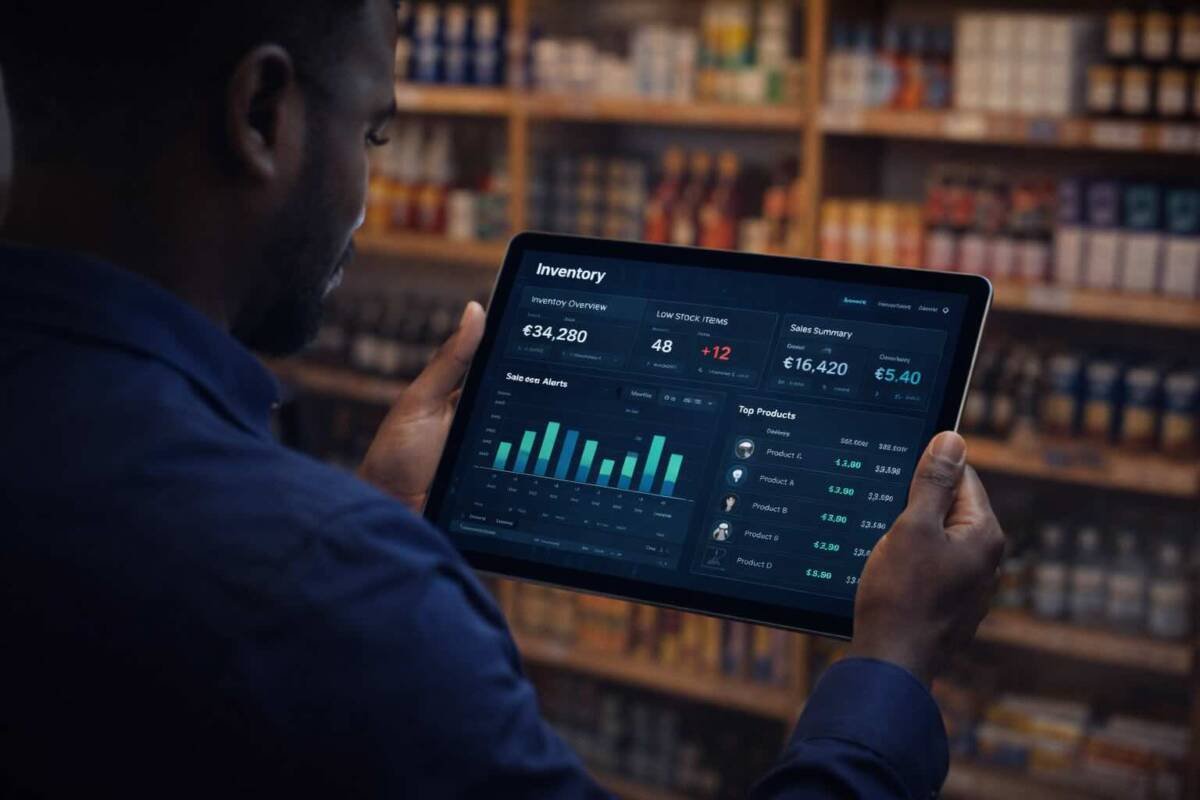
At AIDEX Analytics we connect your POS system and stock records into one simple dashboard, giving you complete visibility into your inventory in real time.
